0
0


- Home
- Blog
- Lens Technology
- Fishing Sunglasses: Polarization, Tints & Spec Guide
Fishing Sunglasses: Polarization, Tints & Spec Guide
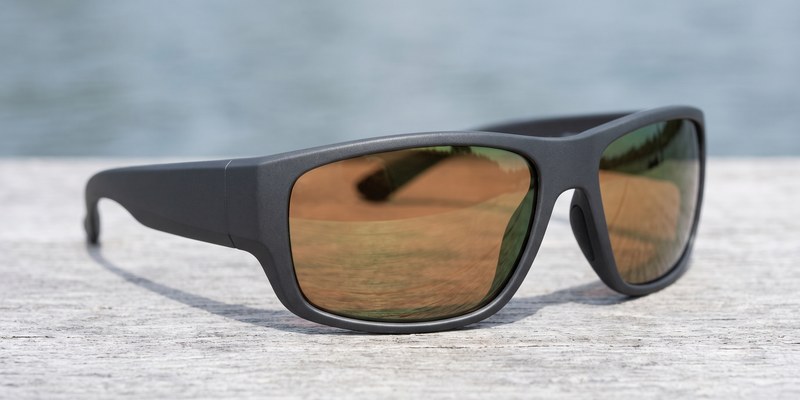
Fishing Eyewear: Specifying Polarization, Tint, and Coverage for Anglers
Most sports sunglasses help an athlete see more comfortably. Fishing eyewear does something different — it changes what the angler can see at all.
That makes fishing one of the few disciplines where lens technology is the product rather than a feature of it. An angler who can spot structure, read depth, and see fish holding beneath the surface has a functional advantage, and they know it. Here's how to specify eyewear for that.
Polarization Is Not Optional Here
Across most sports, polarization is a judgment call. In fishing it's close to a requirement.
Light reflecting off a water surface is strongly horizontally polarized, which is exactly what a polarizing filter blocks. Remove that reflection and the surface stops acting as a mirror — the angler sees through it to structure, drop-offs, weed beds, and fish.
This is a genuinely different benefit from glare comfort. As covered in our guide to choosing lenses by sport, polarization can remove useful information in sports like mountain biking. In fishing it reveals information that is otherwise invisible.
Two specification points follow:
- Polarization efficiency matters. Not all polarized lenses perform equally. Efficiency percentage and the quality of the polarizing film determine how much surface reflection is actually removed. For a fishing line, ask your manufacturer for measured efficiency, not just the word "polarized."
- Axis alignment is critical. The polarizing axis must be correctly and consistently oriented in both lenses. Misalignment produces uneven performance between left and right eye — a defect that's subtle on the bench and obvious on the water, which is why it belongs in your inspection criteria.
Tint Selection by Water and Light
Tint choice in fishing is more consequential than in most sports, because different tints suit genuinely different conditions:
Amber and copper are the workhorse tints for freshwater and inshore fishing. They enhance contrast strongly, which helps separate fish and structure from background in variable and lower light. Many anglers use amber as their default.
Grey and neutral tints preserve color accuracy and reduce brightness without shifting perception. They suit bright open water and offshore conditions where light is intense and true color matters.
Rose and vermilion boost contrast further in low light and overcast conditions, and suit shallow, sight-fishing scenarios.
Green mirror and blue mirror finishes are commonly applied over these base tints — blue mirror for bright offshore conditions, green for inshore versatility.
For brands building a fishing range, offering two or three tint options rather than one is standard practice, because anglers genuinely select by condition. This is also a category where contrast-enhancing lens technology has real application, provided the claims stay grounded in measured performance.
Coverage and Light Leak
Fishing has a specific coverage problem: reflected light from below.
An angler on open water receives light not just from above but bouncing up off the surface. Light entering from beneath or beside the frame degrades exactly the contrast the polarized lens is working to create.
Design responses:
- Wrap geometry with adequate base curve to block side entry
- Side shields on dedicated technical models
- Adequate lens depth to prevent light entering below the frame
- Close fit at the brow without compromising ventilation
Note the contrast with cycling, where maximum airflow drives the geometry. Fishing tolerates — and often benefits from — a closer fit, because the angler isn't generating heat at the same rate.
Durability in a Harsh Environment
Saltwater, UV exposure, and sunscreen make fishing one of the more chemically aggressive environments for eyewear.
Material and construction implications:
- Frame material needs genuine chemical and UV resistance. Nylon (PA12) performs well here, which is one reason it appears frequently in premium fishing frames. Our material comparison covers the alternatives.
- Hardware corrosion is a common failure point. Specify corrosion-resistant screws and hinge components, or hingeless constructions, for saltwater products.
- Coating adhesion must survive repeated salt exposure and cleaning. This belongs in environmental testing before production.
- Hydrophobic and oleophobic coatings shed water and resist sunscreen smearing — a small addition that anglers notice daily.
Buoyancy and retention deserve mention too. Glasses go overboard. Floating frames, or at minimum compatibility with retainer cords, are frequently specified in this category.
Lens Material Considerations
Fishing is one of the few sports where polycarbonate isn't the automatic answer.
Polycarbonate remains the standard for impact resistance and low weight, and is the safe default.
Glass lenses appear in premium fishing eyewear because they offer superior optical clarity and scratch resistance — genuinely valuable when an angler is straining to resolve detail beneath a surface. The trade-offs are weight and impact performance, which is why glass is a considered choice for specific premium SKUs rather than a general recommendation.
Trivex and high-clarity polycarbonate grades sit between the two.
Which is right depends entirely on your price point and target angler — worth deciding deliberately rather than defaulting.
Specification Checklist
For a fishing eyewear line, define:
- Polarization efficiency target and axis tolerance
- Tint range (how many options, matched to which conditions)
- Mirror coating options
- Coverage approach — wrap, side shields, or both
- Lens material — polycarbonate, glass, or premium alternative
- Corrosion-resistant hardware for saltwater
- Hydrophobic and oleophobic coating
- Floating construction or retainer compatibility
- Applicable certification for target markets
Where Tony Optical Fits
We manufacture sports eyewear across fishing and watersports applications, with lens production and coating in-house and our own testing lab for optical, environmental, and salt exposure validation.
For fishing lines specifically, that means we can verify polarization efficiency and axis alignment in production rather than taking a component supplier's word for it — the difference between a lens that's labelled polarized and one that performs on the water.
Frequently Asked Questions
Do fishing sunglasses have to be polarized?
For sight fishing, effectively yes. Polarization removes surface reflection, letting anglers see beneath the water. Non-polarized fishing eyewear exists but forfeits the main functional benefit.
What is the best lens tint for fishing?
Amber or copper for freshwater and inshore contrast, grey for bright offshore conditions, rose for low light and sight fishing. Most serious anglers own more than one.
Does polarization efficiency vary between lenses?
Yes, significantly. Efficiency depends on the polarizing film and construction quality. Ask for measured figures rather than relying on the label.
Are glass lenses better for fishing?
Glass offers superior clarity and scratch resistance, which matters for resolving detail underwater, but costs weight and impact performance. It suits premium SKUs rather than every model.
Why do fishing sunglasses corrode?
Saltwater attacks hinge hardware and screws. Specify corrosion-resistant components or hingeless construction for saltwater products.
Should fishing sunglasses float?
Floating frames or retainer cord compatibility are commonly specified, since eyewear lost overboard is a frequent complaint.
Final Thoughts
Fishing eyewear is one of the few categories where customers can directly perceive the difference between a well-specified product and a mediocre one — because it changes what they catch. Brands that invest in genuine polarization performance, condition-appropriate tints, and saltwater durability build products anglers replace with the same brand.
Developing a fishing eyewear line? Get in touch with our team to discuss polarization specification, tint options, and saltwater durability for your range.