0
0


- Home
- Blog
- Frame & Materials
- PC vs TR90 vs Nylon: Best Frame Material for Sports Sunglasses
PC vs TR90 vs Nylon: Best Frame Material for Sports Sunglasses
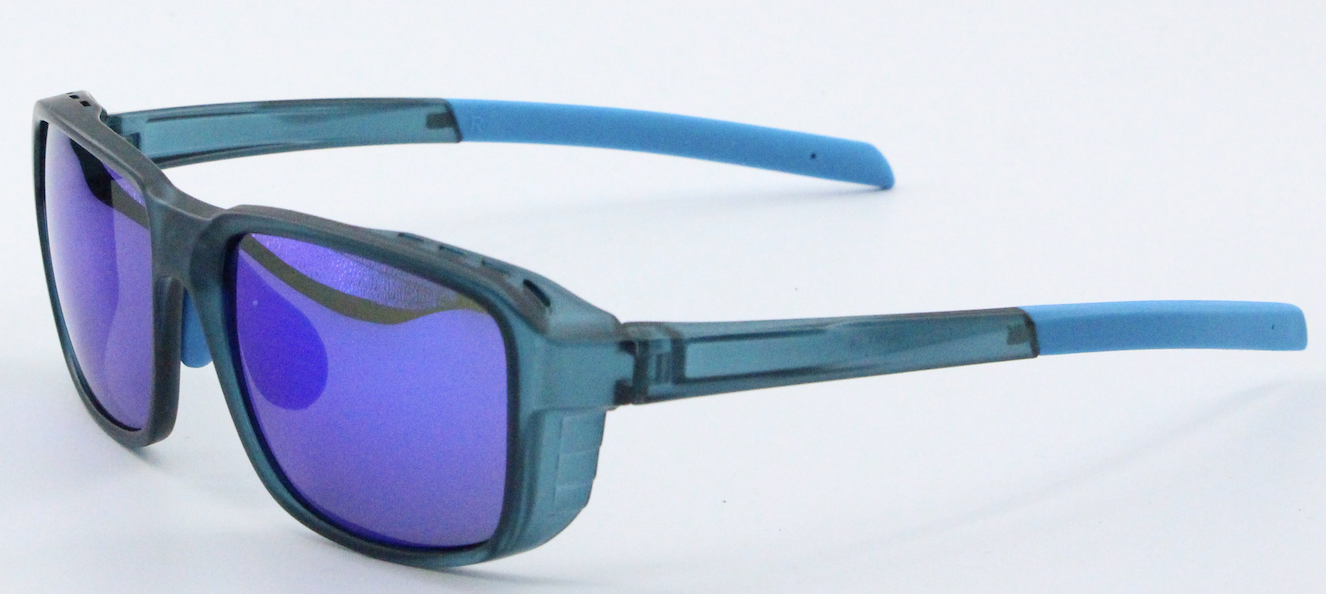
PC vs TR90 vs Nylon: Which Frame Material Is Best for Sports Sunglasses?
Most brands start a sports eyewear project by debating shape, lens tint, and colorways. But the decision that quietly determines how your sunglasses feel, how long they last, and how many warranty returns you handle is made earlier — when you choose the frame material.
For sports sunglasses, three thermoplastics dominate production: polycarbonate (PC), TR90, and nylon (PA12). Each strikes a different balance between weight, flexibility, durability, and cost. Picking the wrong one for your use case is one of the most common — and most expensive — mistakes in eyewear sourcing.
This guide breaks down all three from a manufacturer's perspective, so you can match the material to your product's real purpose rather than a spec sheet.
Why Frame Material Matters More in Sports Eyewear
Lifestyle frames sit still on the face. Sports frames don't. They flex under a helmet strap, absorb impacts in a crash, sit through hours of sweat, and bake in direct sun. The material has to survive all of that without cracking, warping, or losing its shape.
That's why the same three questions decide most sports frame projects:
- How much abuse will the frame take? (impact, flex, temperature)
- How light does it need to feel? (endurance sports reward every gram saved)
- What's your target price point? (material drives both unit cost and tooling)
1. Polycarbonate (PC): The Reliable, Cost-Effective Workhorse
Polycarbonate is best known as a lens material, but it's also widely injection-molded into frames — especially for core and entry-level sports lines.
Strengths
- High impact resistance — a strong choice for cycling, skiing, and racquet sports where a hard knock is likely.
- Lightweight and consistent — injection molding gives repeatable results at scale, keeping unit costs down on large runs.
- Naturally UV-stable and easy to color.
Trade-offs
- Can become more brittle over time with prolonged heat, sweat, and UV exposure.
- More rigid than TR90, so it doesn't bounce back from twisting.
- Quality control matters — without tight process control, PC is more prone to cracking and warping.
Best for: core sports lines, budget-friendly SKUs, safety eyewear, and brands scaling volume quickly.
2. TR90: The Lightweight, Flexible All-Rounder
TR90 (often called Grilamid TR90) is a nylon-based memory polymer originally developed in Switzerland. It belongs to the polyamide family but is lighter and more elastic than standard nylon, which is why it has become the default for so many sports frames.
Strengths
- Extremely light — typically around 1.2–1.3 g/cm³, lighter than acetate and polycarbonate, reducing pressure on the nose and ears during long rides or runs.
- Memory flexibility — bends under stress and snaps back instead of breaking, lowering return rates on active-use frames.
- Hypoallergenic and skin-friendly, with no coating required.
- Injection-friendly, allowing complex, ergonomic shapes at efficient cost.
Trade-offs
- Generally less raw impact resistance than polycarbonate in a direct hit.
- Frame profiles can appear slightly thicker than PC to achieve the same rigidity.
Best for: the broad middle of the sports market — running, cycling, hiking, and everyday active wear where comfort and flexibility win.
3. Nylon (PA12): The Premium Choice for Flagship Performance
In eyewear, "nylon" usually refers to PA12, a high-performance polyamide — not the textile nylon used in clothing. It's the material brands reach for when they want a hero product that feels and performs at a pro level.
Strengths
- Outstanding durability and flexibility combined, holding up in demanding conditions where other plastics fatigue.
- Premium feel and finish — the weight, density, and quality cues performance buyers expect from a flagship model.
- Excellent dimensional stability across temperature swings, important for wrap-around and shield designs that must hold their geometry.
Trade-offs
- Requires more advanced processing and tighter molding control than PC or TR90, so it carries a higher production bar and cost.
- Overkill for entry-level SKUs — its value shows in premium and technical collections.
Best for: flagship models, premium and technical sports lines, and brands positioning around genuine high-performance credibility.
A note from our factory floor: nylon injection is a core specialty at Tony Optical. Many of our long-term partners run PC or TR90 for their core catalog and reserve nylon for their flagship or seasonal "hero" frames — the products meant to define the brand. Nylon isn't a one-size-fits-all material, but in the right category it genuinely outperforms.
PC vs TR90 vs Nylon: Side-by-Side Comparison
| Property | Polycarbonate (PC) | TR90 | Nylon (PA12) |
|---|---|---|---|
| Weight | Light | Lightest | Light–medium |
| Flexibility | Rigid | Excellent (memory) | High |
| Impact resistance | Highest | Good | High |
| Durability over time | Can become brittle | Very good | Excellent |
| Temperature stability | Moderate | Good | Excellent |
| Premium feel | Functional | Comfortable | Premium |
| Processing complexity | Low | Low–moderate | Higher |
| Relative unit cost | $ | $$ | $$$ |
| Ideal use | Core & safety lines | Everyday sports | Flagship & technical |
How to Choose: A Quick Decision Framework
Rather than asking which material is "best," ask which one fits the product you're actually building:
- Launching or scaling SKUs fast, tight budget? Start with PC — consistent results at volume.
- Building a comfortable, flexible everyday sports line? Go with TR90 — the safest all-rounder for active wear.
- Creating a hero product or premium technical collection? Invest in nylon (PA12) — the material that signals pro-level performance.
A common, smart approach is to mix: PC or TR90 for the core catalog, nylon for the flagship drops. That way your range covers price points without compromising your top-tier positioning.
Final Thoughts
There's no universally superior frame material — only the right material for the job. The strongest sports eyewear lines are built by matching frame material, lens technology, and intended use into one coherent product, rather than chasing specs in isolation.
With over 50 years of manufacturing experience and dedicated nylon, TR90, and PC injection capabilities, our team helps brands choose the right material for each model — and prototype it quickly. If you're planning a new sports sunglasses collection or upgrading an existing line, we're happy to advise on the best material fit for your performance goals and price targets.
Ready to develop your next sports eyewear line? Get in touch with our team for material guidance and rapid prototyping.