0
0


- Home
- Blog
- Frame & Materials
- Nylon (PA12) Sunglasses Frames: The Premium Sports Choice
Nylon (PA12) Sunglasses Frames: The Premium Sports Choice
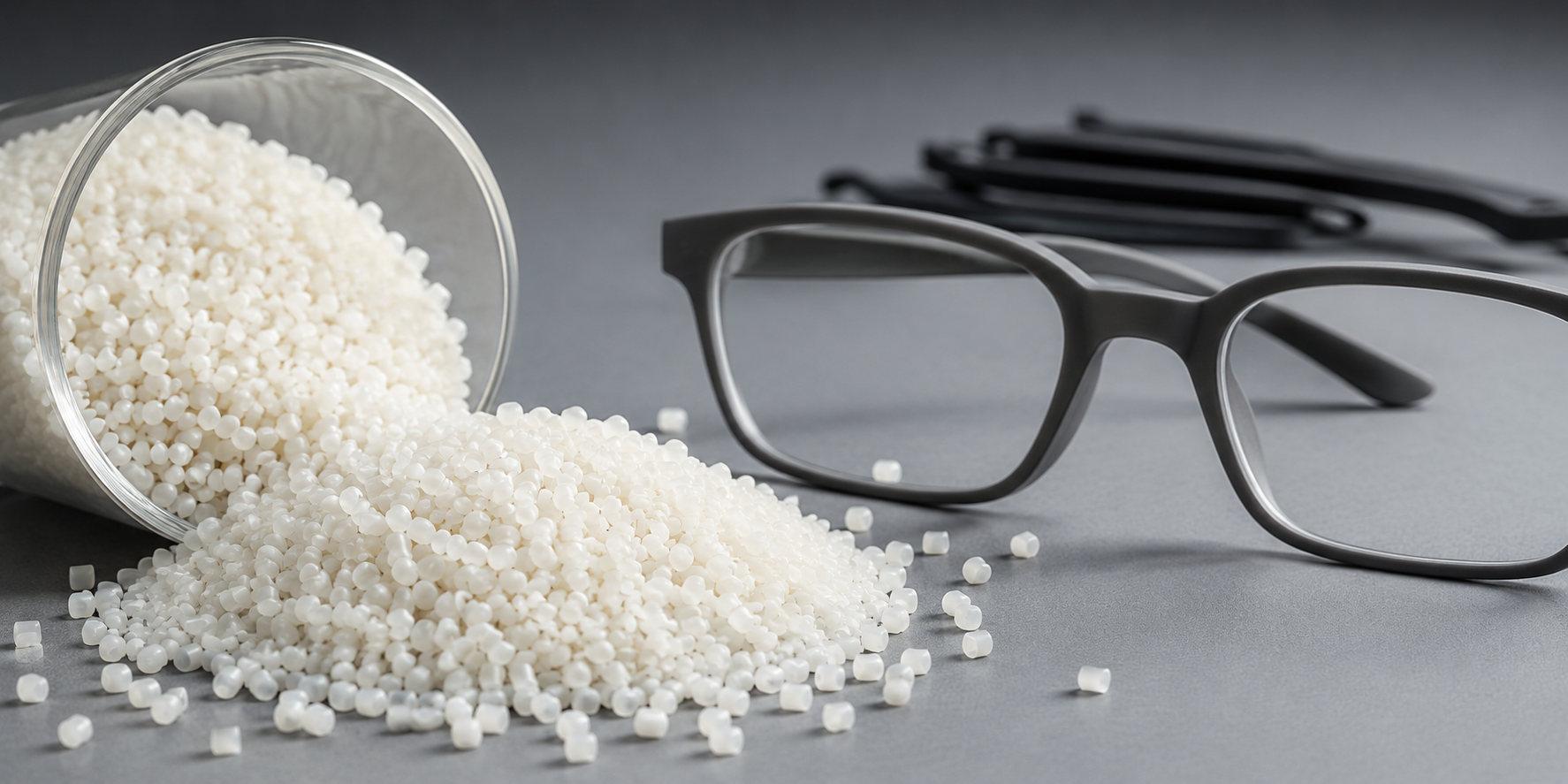
Nylon (PA12) Frames: Why Premium Sports Eyewear Is Built on It
Pick up a high-end pair of sports sunglasses — the kind that survives years of abuse and still feels like almost nothing on your face — and there's a good chance the frame is nylon. It's the material premium athletic brands reach for when performance can't be compromised.
But "nylon" in eyewear isn't the nylon of jackets and backpacks, and producing it well is far harder than the spec sheet suggests. Here's what nylon (PA12) actually is, why it commands a premium, and what separates a great nylon frame from a mediocre one.
What "Nylon" Means in Eyewear
In eyewear, "nylon" refers to a high-performance grade of polyamide — most commonly PA12 — engineered for strength, flexibility, and longevity. It has nothing in common with the soft textile nylon used in clothing.
It's also worth distinguishing nylon from TR90, which is itself a nylon-based memory polymer but lighter and more elastic. If you're weighing your options across the full range, our guide to PC vs TR90 vs nylon breaks down all three side by side. This article focuses on nylon specifically — the material brands choose when they want a flagship product that performs at a professional level.
Why Premium Sports Brands Choose Nylon
Nylon earns its place in high-end frames because it delivers a rare combination of properties at once:
- Durability and flexibility together. Nylon resists impact and flexes under stress without cracking or taking a permanent set — critical for frames that get dropped, sat on, and stuffed into bags.
- Lightweight comfort. Low density keeps frames light for all-day wear and long training sessions.
- Dimensional stability across temperatures. Nylon holds its shape from a hot car dashboard to a cold ski slope, where lesser plastics warp or grow brittle.
- Chemical and UV resistance. It stands up to sweat, sunscreen, salt water, and prolonged sun exposure — the everyday chemistry of real sport.
- Premium feel and finish. Nylon carries the density and surface quality that buyers associate with a flagship product.
- Complex geometries. It holds the wrap and shield shapes that define modern sports eyewear without sacrificing structural integrity.
The Hard Part: Why Nylon Is Difficult to Manufacture Well
Here's what most material guides leave out — nylon's performance is only as good as the manufacturing behind it, and nylon is genuinely demanding to mold.
The core challenge is that nylon is hygroscopic: it absorbs moisture from the air. If the raw material isn't dried to precise specifications before injection molding, that trapped moisture causes defects — surface blemishes, internal voids, weak points, and inconsistent quality from one unit to the next. On top of that, nylon requires tight control of melt temperature, injection pressure, and cooling to achieve a consistent, high-strength result.
This is why not every factory truly offers nylon frames, and why quality varies so widely between those who do. A poorly processed nylon frame can underperform a well-made TR90 one. The material's advantages are real — but they're unlocked only by manufacturers with the equipment, process control, and accumulated experience to mold it correctly, run after run. In nylon, the expertise is the product.
When Nylon Is Worth It — and When It Isn't
Nylon isn't the right answer for every SKU. Its value shows in the right context:
- Choose nylon for flagship and hero models, premium technical collections, and demanding disciplines — cycling, running, fishing, watersports, and skiing — where durability and performance justify the cost.
- Don't over-invest in nylon for entry-level or budget lines, where TR90 or polycarbonate deliver better value for the price point.
A common, smart approach is to build a range that uses nylon for the premium tier and TR90 or PC for the core catalog — covering multiple price points without diluting your top-end positioning.
What to Look for in a Nylon Frame Supplier
If you're developing a nylon line, the supplier matters as much as the material. When choosing a manufacturer, ask specifically:
- Do you injection-mold nylon in-house, or outsource it?
- How do you control material drying and processing for nylon specifically?
- Can you show testing for impact, temperature stability, and durability?
- How do you ensure consistency across large production runs?
A supplier who answers these confidently is one equipped to deliver nylon's full potential — not just its name on a spec sheet.
Where Tony Optical Fits
Nylon injection is a core specialty at Tony Optical, refined across three generations and more than 50 years of eyewear manufacturing. We mold nylon in-house with the process control it demands, and validate every run through our own testing lab — so the frames that leave our facilities deliver the durability, stability, and finish that premium sports eyewear requires.
Many of our partners run TR90 or PC across their core catalog and reserve nylon for the flagship models meant to define their brand. In the right place, it genuinely outperforms.
Final Thoughts
Nylon is the material that separates good sports eyewear from exceptional sports eyewear — but only when it's manufactured with the expertise it requires. For brands building a premium or technical line, the question isn't just whether to use nylon. It's whether your manufacturer can mold it well enough to deliver everything the material promises.
Planning a premium sports eyewear line? Get in touch with our team to discuss nylon frame development and find the right material fit for your collection.