
 0


- Home
- Blog
- Manufacturing Insights
- Sunglasses Hinges & Hardware: Types, Failures & Specification
Sunglasses Hinges & Hardware: Types, Failures & Specification
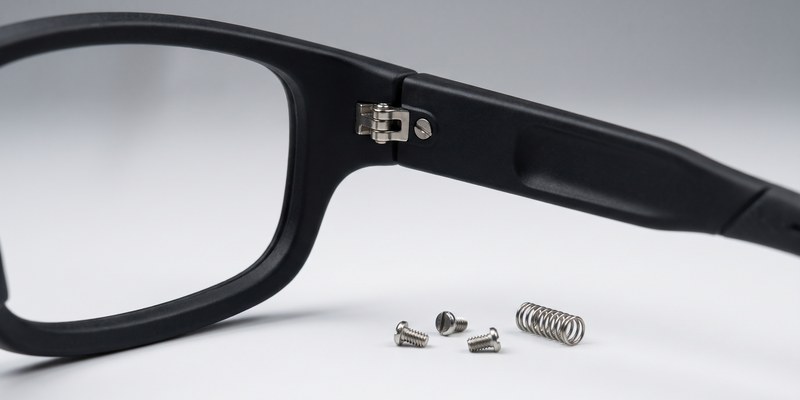
Hinges and Hardware: Where Eyewear Actually Fails, and How to Specify Against It
Ask a returns department where sunglasses break and the answer is rarely the lens or the middle of the frame. It’s the hinge: a temple that won’t stay tight, a screw that has backed out, a metal insert that has pulled loose from the plastic around it.
Hardware is the smallest part of an eyewear specification and the part that decides how long the product lasts. Here’s how the options compare and where each one fails.
Why the Hinge Takes the Abuse
The hinge is the only moving joint in most frames, and it carries the load every time the glasses are opened, closed, pushed onto a head, or pulled off one-handed. Over a product’s life that’s thousands of cycles, often with force applied at an angle the joint wasn’t designed for.
It’s also where two different materials usually meet: a metal hinge part anchored in a plastic frame. That interface is where most hardware failures start, which is why the way the hinge is attached matters as much as the hinge itself.
The Main Hinge Types
Standard barrel hinges. Interlocking metal knuckles joined by a screw. Simple, cheap, easy to repair, and found on most frames. Their weak points are screw loosening and wear in the knuckles over time.
Spring hinges. A small spring in the temple lets it flex outward past its normal open position, then return. This absorbs the force of a frame being pulled on sideways, improves fit across head widths, and makes the frame more forgiving of rough handling. The trade-off is more parts, more cost, and a mechanism that can fatigue if it’s poorly made.
Integrated molded hinges. The hinge is formed in the frame material itself, sometimes with a metal pin. These are common in injection-molded sports frames, where they remove the metal-to-plastic interface altogether. They depend heavily on material choice. A molded hinge in a material with good fatigue resistance, such as nylon, can outlast a metal one. The same design in a brittle material cracks.
Hingeless construction. Temples are fixed or formed as one piece with the front and rely on material flex rather than a joint. It’s the most durable option because there’s nothing to loosen, and it suits children’s eyewear and some performance styles. The trade-offs are that the frame doesn’t fold flat and the material has to flex reliably for the product’s whole life.
How the Hinge Is Anchored
For metal hinges in plastic frames, the anchoring method decides how well the joint survives:
- Insert molding. The metal part is placed in the mold and the plastic forms around it. This gives a very secure bond, but the hinge position is fixed in the tooling.
- Heat or ultrasonic insertion. The metal part is pressed into the molded frame using heat or vibration, which melts the plastic around knurled features on the insert. It’s flexible and widely used, and its quality depends on process control.
- Riveted or screwed fixing. Mechanical fixing through the frame. It’s robust and repairable, but adds visible hardware.
A poorly bonded insert is a hidden defect: it feels fine on a new frame and pulls out months later. Pull-out strength is a measurable property and should be part of your inspection criteria.
Screw Loosening
Hinge screws back out under repeated opening and closing, vibration, and temperature cycling. It’s the most common hardware complaint. Remedies include:
- Thread-locking compounds applied during assembly
- Self-locking screws with nylon patches or deformed threads
- Correct thread engagement, meaning enough knuckle depth for the screw to grip
- Peened or riveted joints where repairability isn’t required
For sports frames that face vibration, such as those covered in our cycling and running guides, screw retention deserves an explicit specification rather than a default.
Corrosion and Skin Contact
Hardware sits against skin, sweat, and in many sports, salt water. Two consequences:
Corrosion. Sweat is mildly corrosive and salt water is aggressive. Standard plated hardware can corrode at the hinge and seize or stain. For watersports and fishing eyewear, stainless steel or other corrosion-resistant hardware, or hingeless construction, is the safer specification.
Nickel. Nickel is a common contact allergen, and the EU restricts nickel release from items in prolonged skin contact, spectacle frames included. Confirm that hardware and any metal components meet the chemical requirements of your markets. Like the other material checks covered in our certification guide, this is easy to overlook until a shipment is questioned.
Testing Hardware Durability
Hardware failures take months to show up, so they should be tested deliberately rather than discovered through returns. Useful checks:
- Hinge cycle testing: repeated opening and closing to a target count, then checking for loosening or wear
- Insert pull-out testing for metal parts anchored in plastic
- Temple deformation and recovery for spring and hingeless designs
- Salt spray or sweat exposure for corrosion resistance
- Temperature cycling to check that joints don’t loosen or bind
Frame endurance requirements, including hinge durability, are covered in spectacle frame standards such as EN ISO 12870. Your testing lab can run these on the approved sample before mass production.
Specifying Hardware
For a product brief, define:
- Hinge type: barrel, spring, integrated, or hingeless
- Anchoring method for metal parts
- Target hinge cycle count
- Screw retention method
- Hardware material and corrosion resistance for the intended environment
- Nickel and chemical compliance for target markets
- Whether the frame must be repairable
Where Tony Optical Fits
We design and manufacture sports eyewear with hinge and hardware choices made alongside the frame design, not afterwards. With in-house injection molding, assembly, and our own testing laboratory, we can match the hinge to the sport, check insert bonding and screw retention in production, and test durability to a real cycle count before your order ships.
Frequently Asked Questions
What is the most durable type of sunglasses hinge?
Hingeless construction has nothing to loosen and is the most durable. Among hinged designs, a well-made spring hinge or an integrated molded hinge in a fatigue-resistant material holds up best to rough handling.
Are spring hinges better than standard hinges?
They flex outward and return, which absorbs sideways force and improves fit, so they handle rough use better. They cost more and add parts that need to be well made.
Why do sunglasses hinge screws keep coming loose?
Repeated opening and closing, vibration, and temperature changes back screws out. Thread-locking compound, self-locking screws, and enough thread engagement prevent it.
Do hinges rust?
Standard plated hardware can corrode with sweat and especially salt water. Stainless or other corrosion-resistant hardware, or hingeless designs, suit watersports.
Can the hinge be changed after tooling?
Often not easily. Insert-molded and integrated hinges are fixed in the mold, so the hinge type should be decided before tooling.
How is hinge durability tested?
Mainly by cycle testing, which opens and closes the hinge a set number of times and then checks for loosening, plus pull-out tests for metal inserts and corrosion exposure for hardware.
Final Thoughts
Hardware is a small line on the bill of materials and a large share of the returns. Brands that choose the hinge for the sport, specify how it’s anchored and how screws stay put, and test durability before launch avoid the slow failures that only show up once customers have been using the product for a season.
Specifying hardware for a new frame? Get in touch with our team to discuss hinge options, durability testing, and corrosion-resistant hardware for your line.

Article Classification
Recent Articles
- Sunglasses Hinges & Hardware: Types, Failures & Specification
- Custom Logo Sunglasses: Branding Methods for Private Label
- Eyewear Quality Control: Inspection, AQL & Defect Standards
- Eyewear Product Development: From 3D Design to Production
- How to Choose a Sports Sunglasses Manufacturer (B2B Checklist)