
 0
0


- Home
- Blog
- Manufacturing Insights
- Custom Logo Sunglasses: Branding Methods for Private Label
Custom Logo Sunglasses: Branding Methods for Private Label
Custom Branding for Private Label Eyewear: Logo Methods, Durability, and Packaging
For a private label brand, the logo is the product's signature — and it's often the first thing to fail. A temple logo that rubs off after a month of sweat and sunscreen tells a customer more about your quality than any spec sheet.
Choosing how your branding is applied is a manufacturing decision, not just a design one. Each method carries different costs, minimums, durability, and aesthetic results. Here's how they compare.
The Main Logo Application Methods
Pad printing. Ink is transferred from an etched plate to the frame via a flexible silicone pad, which lets it conform to curved surfaces like temples. It's the most widely used method: cost-effective, capable of fine detail and multiple colors, and requires no change to the mold. The trade-off is durability — printed ink sits on the surface and can wear under abrasion, sweat, and solvents unless the ink system and any protective topcoat are properly specified.
Laser engraving. A laser removes or alters material to mark the logo permanently. On frames it produces a clean, tonal mark that cannot rub off. On lenses, a laser can etch a small logo into the corner by removing coating locally — a subtle, premium detail common on mirrored lenses. Laser marking is limited to the frame's own color and contrast, so it suits understated branding rather than bold color.
Hot stamping (foil stamping). Metallic or colored foil is transferred using heat and pressure, producing a crisp, reflective finish — gold, silver, and chrome effects are typical. It reads as premium and offers good durability, but works best on relatively flat surfaces and simple logo shapes.
Metal inserts and emblems. A separate metal badge is fitted into a recess in the temple. This is the most premium option and the most durable — but it requires the recess to be designed into the mold, so it must be decided at the 3D design stage, not added later.
Molded logos. The logo is cut into the mold itself, producing a raised or recessed mark in the frame material. It's permanent and carries no per-unit application cost, but it's fixed into the tooling — changing it means modifying steel. It suits brands with custom molds and a settled identity.
Full-coverage graphics. Water transfer printing and UV printing can apply patterns, camouflage, or full-color artwork across a frame surface. These suit fashion and statement SKUs, with durability depending heavily on the protective coating applied afterward.
Choosing the Right Method
| Method | Durability | Look | Tooling change | Best for |
|---|---|---|---|---|
| Pad printing | Moderate | Color, detailed | No | Most stock and custom lines |
| Laser engraving | Permanent | Tonal, understated | No | Premium, minimalist branding |
| Hot stamping | Good | Metallic, crisp | No | Premium accents |
| Metal insert | Excellent | Premium, dimensional | Yes | Flagship models |
| Molded logo | Permanent | Integrated | Yes | Custom-mold brands |
| Full graphics | Varies with coating | Full color | No | Fashion and statement SKUs |
A practical point for brands launching on customized stock frames: methods that don't require tooling changes — pad printing, laser, and hot stamping — let you brand an existing mold without new investment. Metal inserts and molded logos belong in a custom development project.
Placement and Design Considerations
Where the logo sits affects both appearance and durability:
- Outer temple is the most common and visible position, but also where the frame contacts hair, helmets, and hands.
- Inner temple is used for model names, sizing, and compliance marking — protected from abrasion but less visible.
- Lens corner carries a small etched or printed mark and signals quality when executed well.
- Nose bridge and frame front offer subtle placement for secondary branding.
Design your logo artwork with the method in mind. Very fine lines and small text can fill in or break up during pad printing, and highly detailed artwork may not reproduce well at temple scale. Your manufacturer should review artwork files and flag detail that won't survive production before you approve a sample.
Testing Logo Durability
Logo durability should be tested, not assumed. Common checks include:
- Rub and abrasion testing to simulate handling and wear
- Adhesion testing — typically a cross-hatch tape test for printed marks
- Sweat and chemical resistance against artificial perspiration, sunscreen, and alcohol-based cleaners
- UV exposure to check for fading
For sports eyewear, the sweat and sunscreen tests matter most — they're where printed logos fail in real use. A manufacturer with an in-house testing lab can run these on your approved sample, and they belong in your quality control criteria alongside cosmetic and dimensional checks.
Color Matching
For printed and full-color branding, agree color standards before production. Specify Pantone references, approve physical color samples rather than on-screen proofs, and keep an approved sample as the reference for later runs. Frame color and logo color interact — the same ink reads differently on matte black, translucent crystal, and bright colorways.
Packaging: The Other Half of Your Brand
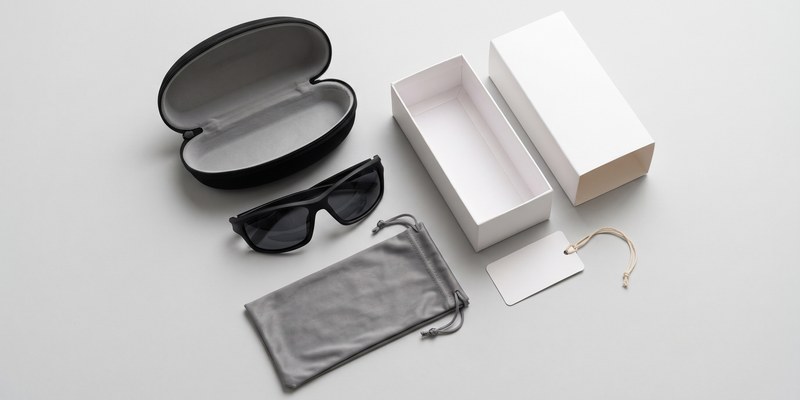
For many customers, packaging is the first physical brand experience. Private label packaging typically includes:
- Cases — hard, semi-hard, or soft pouch, with logo applied by debossing, printing, or a metal badge
- Microfiber cloths and pouches with printed branding
- Retail boxes for shelf presentation
- Hang tags and inserts carrying product and care information
- Labeling — barcodes, UPC or EAN codes, and market-specific compliance information
Retail-ready packaging requirements vary by channel. Major retailers and online marketplaces often specify barcode placement, carton marking, and polybag rules — confirm these before packaging artwork is finalized. Packaging is also where environmental improvements are usually fastest to make, as covered in our guide to sustainable eyewear materials.
Protecting Your Brand
Two points worth building into any private label arrangement:
- Trademark authorization. A reputable manufacturer will ask you to confirm you own or are authorized to use the marks being applied. It protects both parties, and a supplier who never asks is one who will print anyone's logo.
- Artwork and tooling control. Clarify who holds your logo plates, stamping dies, and any branded molds, and confirm they won't be used for other customers.
Where Tony Optical Fits
We produce private label sports eyewear with logo application and packaging handled as part of our in-house production, so branding is inspected alongside the rest of the product rather than outsourced. Through our OEM/ODM service, we help brands choose a branding method that fits their price point and use case, review artwork for manufacturability, and validate durability before mass production.
Frequently Asked Questions
What is the most durable way to put a logo on sunglasses?
Laser engraving, molded logos, and metal inserts are the most durable, since none rely on surface ink. Pad printing can be durable with the right ink system and topcoat, but should be tested against sweat and abrasion.
Can I add my logo to stock frames without new tooling?
Yes. Pad printing, laser engraving, and hot stamping apply branding to existing frames without mold changes. Metal inserts and molded logos require tooling work.
Can a logo be put on the lens?
Yes — typically a small laser-etched or printed mark in the lens corner. Laser etching on mirrored lenses produces a clean, premium result.
Does custom branding affect MOQ?
It can. Each colorway and branding variation may carry its own minimum, and methods requiring plates, dies, or mold changes add setup costs that are spread across the order.
How do I make sure logo colors match my brand?
Specify Pantone references and approve physical color samples rather than digital proofs. Keep an approved sample as the reference for future production.
Will the manufacturer need proof I own my trademark?
A reputable one will ask. It protects both the brand and the manufacturer, and is standard practice in private label production.
Final Thoughts
Branding is where a private label product becomes yours — and where customers first notice whether it was made with care. Choosing a method suited to your price point, designing artwork for the process, and testing durability before production protects both the product and the name on it.
Planning a private label line? Get in touch with our team to discuss logo methods, packaging options, and branding for your collection.

Article Classification
Recent Articles
- Custom Logo Sunglasses: Branding Methods for Private Label
- Eyewear Quality Control: Inspection, AQL & Defect Standards
- Eyewear Product Development: From 3D Design to Production
- How to Choose a Sports Sunglasses Manufacturer (B2B Checklist)
- Inside Eyewear Manufacturing: From Raw Material to Finished Product