
 0


- Home
- Blog
- Industry Insights
- Safety Eyewear Manufacturing: Developing an Industrial PPE Line
Safety Eyewear Manufacturing: Developing an Industrial PPE Line
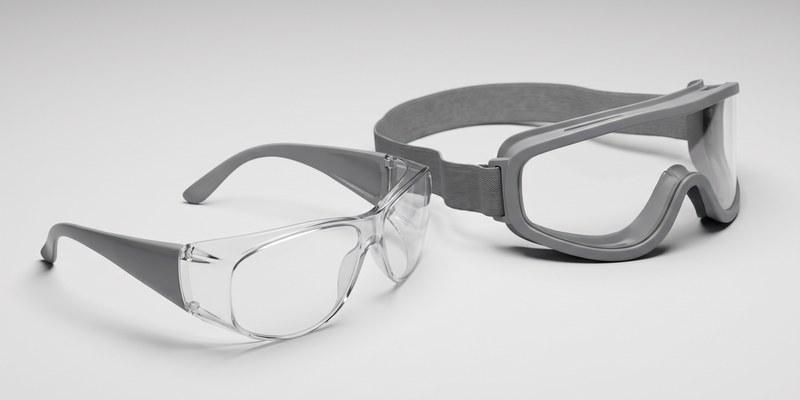
Safety Eyewear Manufacturing: What Developing an Industrial Eye Protection Line Actually Requires
Safety eyewear looks like a close cousin of sports eyewear. In manufacturing terms, it isn’t.
With a sports sunglass, protection is a feature and certification is a market requirement. With industrial eye protection, protection is the product, certification is the condition of sale, and the person buying it is a procurement manager reading a specification rather than a consumer choosing a look.
For brands and distributors considering a safety line, here’s what that difference means in practice.
The Standards Landscape — and the Shift Underway
Three frameworks cover most of the market:
United States — ANSI/ISEA Z87.1-2020. The current revision of the US occupational eye and face protection standard, referenced by OSHA for workplace eye protection. It defines impact performance, optical requirements, and a marking system that appears directly on the product.
Europe — EN 166, transitioning to EN ISO 16321-1:2022. This is the development most worth understanding right now. The long-established EN 166 is being superseded by EN ISO 16321-1, part of an international effort to harmonise eye protection standards. The transition is active, which means products, documentation, and buyer expectations are all moving — and a product certified to the outgoing standard has a finite commercial life.
Other markets. Canada works to CSA Z94.3, Australia and New Zealand to AS/NZS 1337.
Because transition timelines shift and the detail matters commercially, confirm the current position for your target markets before committing to tooling. Our certification guide covers the broader compliance landscape across eyewear categories.
Impact Ratings: The Core Specification
Impact performance is what separates safety eyewear from everything else, and it’s expressed differently by region.
Under ANSI Z87.1, products are marked Z87 for basic impact or Z87+ for high impact. The plus is not a minor upgrade — high impact involves a far more demanding test regime, and many industrial specifications require it outright.
Under the European framework, impact is graded by the velocity the product withstands: S for increased robustness, then F, B, and A for low, medium, and high energy impact respectively. European standards also apply an optical class (1, 2, or 3), where class 1 is required for continuous wear — relevant because a worker wearing eye protection for a full shift needs optical quality a brief-use product doesn’t.
Both systems also use marking codes for specific hazards — liquid splash, dust and fine dust, molten metal, UV and infrared filtering, and welding shades. These markings are applied to the lens and frame, and getting them right is a manufacturing requirement, not a labelling afterthought.
Why Polycarbonate Is Effectively Mandatory
In sports eyewear, frame and lens material is a genuine trade-off decision, as covered in our material comparison guide.
In safety eyewear, lens material is largely settled: polycarbonate, because of its impact performance. Alternatives exist for specialised applications, but a standard industrial safety lens is polycarbonate, and specification debates happen around coatings rather than base material.
Frame material still allows choice — nylon and TR90 both appear, selected for chemical resistance, temperature performance, and comfort over a long shift rather than for aesthetics.
The Design Requirements That Differ From Sports
Side protection is mandatory. Industrial standards require protection from lateral impact, delivered through integrated side shields, a wrap geometry that provides equivalent coverage, or attachable shields. This shapes the frame front from the first sketch.
Over-the-glass (OTG) designs matter commercially. A significant share of industrial workers wear prescription glasses, and OTG safety eyewear fits over them. It’s a distinct product geometry — wider, deeper, with clearance engineered in — and it sells steadily because it solves a problem employers face constantly. The alternative route, prescription safety eyewear, carries its own complexity similar to the prescription challenges in sports frames.
Anti-fog is a safety function, not a comfort feature. This is the single most common complaint in industrial eye protection. A worker whose glasses fog in a humid plant lifts them to see — and at that moment the PPE has failed. Specify anti-fog coating properly, and design ventilation into the frame, because as with every other category, coating supplements airflow rather than replacing it.
Anti-scratch coating affects service life. Industrial environments are abrasive, and scratched lenses get discarded. Coating durability directly determines replacement cycles, which procurement teams track as cost per worker per year.
Comfort is a compliance mechanism. This is the point most new entrants miss. Uncomfortable PPE gets removed, and removed PPE protects nobody. Weight, pressure points, and fit across a full shift are safety considerations — which is why employers increasingly buy on worn-all-day comfort rather than on price alone.
The Buyer Is Different
Selling safety eyewear means selling to a different organisation than selling sunglasses does:
- PPE distributors and industrial suppliers buying to catalogue specification
- Safety managers and procurement teams evaluating against a written standard
- Workwear and industrial brands adding eye protection to an existing range
What follows from that:
- Documentation is the gate. Test reports, certificates, and a technical file are reviewed before any commercial conversation progresses.
- Consistency outranks novelty. A buyer reordering the same SKU for three years wants it identical, which puts weight on quality control and batch consistency.
- Specification beats styling. Appearance matters less than markings, ratings, and fit.
- Volumes can be substantial and steady, since consumable PPE reorders on a cycle rather than a season.
Common Mistakes Entering This Category
- Treating it as a sports frame with a Z87 mark. Certification applies to the finished assembled product and its design, not to a sticker.
- Leaving certification until after tooling. Side shield geometry, coverage, and marking areas must be designed in from the start, as covered in our development timeline guide.
- Underspecifying anti-fog. It’s the leading cause of field complaints and of PPE being removed.
- Ignoring the European transition. Certifying to an outgoing standard shortens your product’s commercial life.
- Assuming one product covers all markets. Marking and testing requirements differ, and a single SKU rarely satisfies every region without planning.
Where Tony Optical Fits
We manufacture safety eyewear alongside our sports and lifestyle ranges, with in-house injection molding, lens production and coating, and our own testing laboratory for impact and optical validation.
For brands and distributors developing a protection line, that means we can advise on which standards apply to your target markets, engineer coverage and ventilation into the design before tooling, and provide the certification documentation your buyers will ask for first. Our OEM/ODM development process covers safety products the same way it covers performance eyewear.
Frequently Asked Questions
What does Z87+ mean on safety glasses?
It indicates the product meets the high impact requirements of ANSI/ISEA Z87.1, as distinct from Z87 alone, which indicates basic impact. Many industrial specifications require the high impact rating.
Is EN 166 still valid?
EN 166 is being superseded by EN ISO 16321-1:2022 as part of an international harmonisation effort. The transition is active, so confirm the current position for your market before certifying a new product.
Can sports sunglasses be sold as safety eyewear?
Not unless they are designed, tested, and marked to the applicable occupational standard. Protection claims change which standard applies, and certification covers the finished product.
What is OTG safety eyewear?
Over-the-glass designs that fit over a wearer’s prescription spectacles. They are a distinct geometry with engineered clearance, and they sell well because many industrial workers wear prescriptions.
Why is anti-fog so important in safety glasses?
Because fogged eyewear gets lifted or removed, which defeats the protection entirely. It is treated as a safety requirement rather than a comfort upgrade.
What lens material is used for safety eyewear?
Polycarbonate, almost universally, because of its impact resistance. Specification discussion usually centres on coatings rather than base material.
Final Thoughts
Safety eyewear rewards manufacturers and brands who treat it as its own discipline rather than a variation on sunglasses. The standards are stricter, the buyer is more technical, and the product fails in a way that matters. Done properly, it’s also a steadier business than fashion-driven eyewear — specification-led, reorder-driven, and built on documentation that takes real capability to produce.
Developing a safety eyewear line? Get in touch with our team to discuss standards, design requirements, and certification for your target markets.


Article Classification
Recent Articles
- Kids’ Sunglasses Manufacturing: UV, Sizing & Safety Guide
- Safety Eyewear Manufacturing: Developing an Industrial PPE Line
- Safety Eyewear Manufacturing: Developing an Industrial PPE Line
- Sunglasses Certification: Compliance Requirements by Market
- How to Start Your Own Sunglasses Brand: MOQ, Costs & Timeline