
 0


- Home
- Blog
- Frame & Materials
- Sunglasses Frame Finishes: Matte, Rubberized, Two-Tone & Colour
Sunglasses Frame Finishes: Matte, Rubberized, Two-Tone & Colour
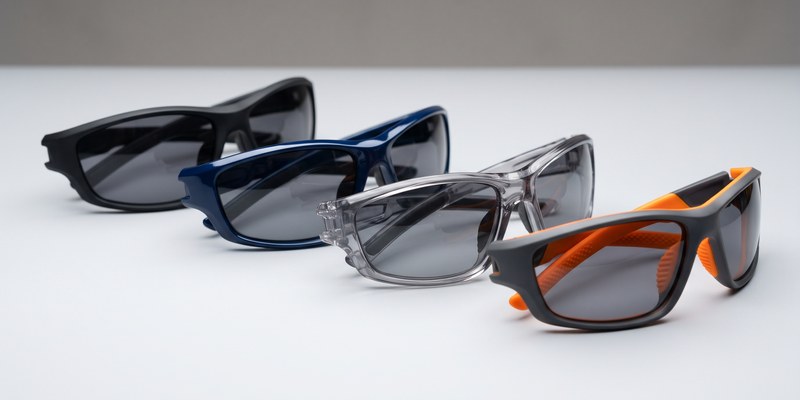
Frame Finishes and Colour: What Lasts, What Doesn’t, and How It’s Made
Customers judge a frame by how it looks and feels before they ever put it on. Matte or gloss, solid or translucent, smooth or soft-touch: these choices shape how premium a product seems, and they’re among the first decisions a brand makes.
They’re also where many quality complaints come from. Paint chips, soft-touch coatings turn sticky, colours drift between production runs. How a finish is made decides whether it still looks right after a year of use. Here’s how the main options work.
Colour: Molded In or Applied On
Every frame colour is made in one of two basic ways, and the difference matters more than the colour itself.
Mass-dyed (molded-in) colour. Pigment is mixed into the plastic before molding, so the colour runs all the way through the material. Scratches and wear don’t reveal a different colour underneath, and there’s nothing to chip or peel. For sports eyewear that gets dropped and handled roughly, this is the most durable option.
Painted or coated colour. The frame is molded in a base material and the colour is sprayed on afterwards. This allows effects that molded colour can’t easily achieve, such as metallics, gradients, and precise matches to a brand colour, and it lets one molded part become many colourways. The trade-off is durability: a coating can scratch, chip at edges and hinges, and wear through where the frame is handled most.
Many ranges use both: mass-dyed colours for core performance models, painted finishes for fashion colourways and special editions.
Matte vs Gloss
Matte finishes are popular in sports eyewear for their understated look and because they hide fingerprints and light scratches. Matte can be produced two ways:
- Textured in the mold. The mold surface itself is textured, so every frame comes out with an even matte finish and nothing to wear off. This is the most durable approach, but the texture is fixed in the tooling.
- Matte coating. A matte paint or lacquer applied after molding. It’s flexible and quick to change between colourways, but it can polish up to a shine where hands and skin rub it over time.
Gloss finishes look rich and show colour depth well, especially on translucent frames. They also show scratches, fingerprints, and any molding flaws more clearly, so they need a higher standard of molding and handling.
Soft-Touch and Rubberized Coatings
Soft-touch coatings give a frame a velvety, grippy feel that customers notice the moment they pick it up. They’re common on sports frames and help with grip.
They’re also one of the most common sources of long-term complaints. Some soft-touch coatings break down over time with heat, humidity, sweat, and sunscreen, becoming sticky or wearing through to the base material. A frame that feels premium in the shop can feel worn out a year later.
If you want this feel, specify the coating for durability, not just appearance, and test it against sweat and sunscreen exposure. Often the better answer is not a coating at all but the next option.
Two-Shot Molding
Two-shot (or double-injection) molding forms two materials into one part in a single process: for example, a rigid frame with soft rubber nose pads and temple tips molded directly onto it, or a frame in two contrasting colours.
The advantages:
- No adhesive and no coating to fail. The two materials bond during molding, so grip zones don’t peel or wear off like a coating can.
- Durable soft-touch areas exactly where grip matters, such as temples and nose bridge
- Two-colour designs with clean, permanent colour boundaries
The cost is tooling: two-shot molds are more complex and expensive, and the material pairing has to be chosen so the two bond well. For performance frames that need grip, it’s usually the more durable route. It also helps with retention, which matters in sports such as running.
Translucent and Crystal Colours
Translucent frames are popular and look premium, but they’re unforgiving to make. Because light passes through the material, they show what solid colours hide: flow lines, weld lines where molten plastic met in the mold, small bubbles, and contamination.
A translucent frame is, in effect, a visible test of molding quality. If you’re specifying crystal or translucent colours, the quality standard for cosmetic defects needs to be agreed and backed by physical limit samples, and the mold and gate design should account for it from the start. Material choice affects the result too, since different polymers give different clarity.
UV Fading and Discolouration
Sunglasses spend their working life in the sun. Some pigments and materials fade or yellow with prolonged UV exposure, which shows most on bright colours and clear or white frames.
Ask for pigments and materials with good UV stability, and include UV ageing in your testing for any colour where fading would be noticeable. White and clear frames deserve particular attention.
Colour Matching Across Batches
Colour consistency is one of the most common points of dispute between brands and factories. A colour approved in one batch can drift slightly in the next, because of pigment lots, material lots, or molding conditions.
How to control it:
- Specify colours by Pantone reference and approve physical colour samples, not screen images
- Keep an approved colour standard, a physical sample held by both sides
- Check colour under consistent lighting, since the same frame looks different under daylight, store lighting, and warehouse lighting
- Agree an acceptable tolerance in writing before production
- Match colours across parts such as front, temples, and rubber components, which may be different materials that take colour differently
This connects directly to logo and branding colours, which need the same discipline.
Specification Checklist
For each colourway, define:
- Mass-dyed or painted colour
- Matte (textured mold or coating), gloss, or soft-touch
- Two-shot molded grip areas or two-colour design
- Translucent or solid, with an agreed cosmetic standard
- UV stability requirements
- Pantone references and approved physical colour standards
- Colour tolerance between batches
Where Tony Optical Fits
We manufacture sports eyewear with colour and finishing done in-house alongside injection molding, so finish decisions are made with molding and durability in mind rather than added afterwards. We can advise on which finishes suit your price point and sport, produce physical colour standards for approval, and test finishes against wear, sweat, and UV before production.
Frequently Asked Questions
Which sunglasses frame finish is most durable?
Mass-dyed colour with a mold-textured matte finish is the most durable, because there’s no coating to chip or wear. Two-shot molded grip areas outlast soft-touch coatings.
Why do rubberized sunglasses get sticky?
Some soft-touch coatings break down over time with heat, humidity, sweat, and sunscreen. Durable coating choice and testing help, and two-shot molded rubber avoids the problem entirely.
What is two-shot molding in eyewear?
A process that molds two materials into one part, such as a rigid frame with soft rubber nose pads or temples. The materials bond during molding, so nothing peels off.
Are matte or gloss frames better?
Matte hides fingerprints and light scratches and suits sports eyewear. Gloss shows colour depth well but also shows wear and molding flaws more clearly.
Why do translucent frames cost more to make well?
Light passes through them, so they show flow lines, bubbles, and other molding flaws that solid colours hide. They need tighter process control and cosmetic standards.
How do I keep frame colours consistent between orders?
Specify Pantone references, approve and keep a physical colour standard, check under consistent lighting, and agree an acceptable tolerance in writing.
Final Thoughts
Finish is where a frame makes its first impression and, too often, its last. Brands that choose finishes for how they’ll look after a season, not just on the shelf, and that control colour with physical standards, avoid the slow-burning complaints that come from coatings and colour drift.
Choosing finishes for a new collection? Get in touch with our team to discuss colour methods, durable finishes, and colour standards for your range.

Article Classification
Recent Articles
- Sunglasses Frame Finishes: Matte, Rubberized, Two-Tone & Colour
- Sustainable Eyewear Materials: Recycled, Bio-Based & Real Claims
- Frame Geometry: Sizing, Base Curve & Fit for Sports Eyewear
- Nylon (PA12) Sunglasses Frames: The Premium Sports Choice
- PC vs TR90 vs Nylon: Best Frame Material for Sports Sunglasses