
 0


- Home
- Blog
- Manufacturing Insights
- Sunglasses Mold Tooling: Cost, Cavities, Steel & Ownership
Sunglasses Mold Tooling: Cost, Cavities, Steel & Ownership
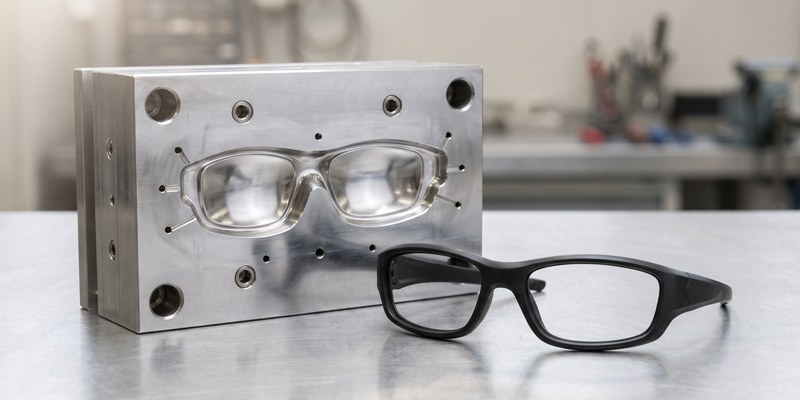
Eyewear Mold Tooling Explained: Cost, Cavities, Steel, and Who Owns the Mold
For a custom frame, the mold is the largest single investment a brand makes, and the one most buyers understand least. Tooling quotes vary widely between factories, and the reasons are rarely explained. Contracts often say little about who owns the mold or what happens to it later.
Here’s what goes into eyewear tooling, what drives its cost, and what to agree before you pay for it.
What a Sunglasses Mold Is
An injection mold is a precision steel tool with a cavity shaped like the part. Molten plastic is injected into it, cooled, and ejected as a finished part. A frame usually needs several molds, or several cavities, for its parts: the front, the left and right temples, and any separate pieces such as nose pads, rubber grips, or lens retention parts.
Each mold is machined from hardened steel, then polished or textured to give the part its surface finish, fitted with cooling channels and ejector pins, and trial-run until it produces parts to specification. That’s why tooling typically takes 45 to 60 days, as covered in our development timeline guide.
What Drives Tooling Cost
Two molds for frames that look similar can differ substantially in cost. The main factors:
- Number of parts. Every separate component needs tooling. A one-piece shield frame costs less to tool than a frame with separate temples, hinge parts, and rubber grips.
- Part complexity. Undercuts, which are features that would trap the part in a simple two-half mold, need sliding sections called slides or lifters. Each one adds cost.
- Number of cavities. More cavities cost more to build but make each part cheaper to produce.
- Steel grade. Better steel lasts longer and polishes better, and costs more.
- Surface finish. High-gloss polishing and mold texturing both add work.
- Two-shot molding. Molding two materials into one part, as covered in our frame finishes guide, needs a more complex tool.
When comparing tooling quotes, ask each factory to break them down by part, cavity count, and steel grade. A low quote often means fewer cavities or softer steel, which costs you more later.
Cavities: Fewer to Start, More to Scale
A mold can have one cavity or several, producing one part or several per cycle.
- Single cavity: lowest tooling cost, higher cost per part, slower output. It suits a launch or a low-volume style.
- Multi-cavity: higher tooling cost, lower cost per part, faster output. It suits proven, high-volume styles.
- Family molds: different parts in one tool, such as a left and right temple together. They make sense for paired parts that are always used together.
A practical approach is to start with fewer cavities for a new style. If it sells well, a multi-cavity mold can be built later and paid back by the lower part cost.
Steel Grade and Mold Life
Mold steels differ in hardness, how well they polish, and how they resist wear and corrosion:
- Pre-hardened steels are common for general production. They machine more easily and suit moderate volumes.
- Hardened tool steels last much longer and suit high-volume styles.
- Stainless mold steels take a high polish and resist corrosion. They’re preferred for gloss finishes and translucent frames, where any mark on the mold shows on every part.
Mold life is measured in shots, meaning molding cycles. Ask your factory what shot life the quoted steel supports and what maintenance is included. A cheaper mold that wears out partway through a successful style’s life isn’t a saving.
Designing for Modification
Changes after tooling are expensive, but some are unavoidable. Good mold design makes them easier.
The key principle is “steel safe” design. Removing steel from a mold is easier than adding it, so where dimensions might need adjusting after the first samples, the mold is cut so that any change means removing a little more steel. That keeps T1 adjustments quick and cheap.
Two other ways to build in flexibility:
- Interchangeable inserts. Parts of the mold that are likely to change, such as a logo area, nose bridge, or lens groove, can be built as replaceable inserts. A variation then needs a new insert rather than a new mold.
- Shared tooling across a range. One front mold with different temple molds, or the reverse, can produce several styles from less tooling.
These decisions belong at the design stage, before steel is cut.
Who Owns the Mold
This is the question that causes the most disputes, so settle it in writing before tooling starts.
In OEM arrangements, the brand usually pays for the mold and owns it, while the factory holds it and uses it to produce the brand’s orders. Your agreement should cover:
- Ownership. Who owns the mold, stated plainly.
- Exclusivity. The mold won’t be used to make product for anyone else.
- Storage. Where it’s kept and for how long, especially between orders.
- Maintenance. Who pays for routine maintenance and repair.
- Replacement. What happens when the mold reaches the end of its life.
- Transfer. Whether and how you can move the mold to another factory, and on what notice.
- Inactivity. What happens if no orders are placed for an extended period.
A manufacturer who’s vague about any of these is a risk. Our manufacturer selection checklist covers other questions to ask.
Tooling or Stock Frames?
New tooling isn’t always the right answer. Customising an existing stock frame needs no tooling investment and gets to market far faster, as covered in our guide to starting a sunglasses brand. Many brands launch on customised stock frames and invest in custom tooling only for proven or signature styles.
Where Tony Optical Fits
We build and run injection tooling for eyewear in-house, alongside molding, finishing, and assembly. That means we can advise on cavity count, steel grade, and steel-safe design for your volumes, and adjust molds quickly during sampling. Through our OEM/ODM development process, we agree tooling ownership and terms with customers in writing before work begins.
Frequently Asked Questions
How much does a sunglasses mold cost?
It depends on the number of parts, complexity, cavity count, steel grade, and finish. Ask for a quote broken down by part so you can compare factories fairly.
How long does it take to make a sunglasses mold?
Typically 45 to 60 days for tooling, followed by sampling and adjustment.
Who owns the mold in OEM manufacturing?
Usually the brand that paid for it, while the factory holds it. Ownership, exclusivity, storage, and transfer terms should be agreed in writing before tooling starts.
Can a mold be changed after it’s made?
Small changes are possible, especially if the mold was designed “steel safe.” Larger changes may need new steel or a new mold.
How many cavities should my mold have?
Fewer for a new or low-volume style, more for proven high-volume styles. Starting small and adding a multi-cavity mold later is common.
How long does a mold last?
It depends on the steel and maintenance. Ask your factory for the expected shot life of the quoted steel.
Final Thoughts
Tooling is where a custom frame becomes a real asset, and where vague agreements turn into disputes later. Brands that understand what drives tooling cost, match cavities and steel to their volumes, and settle ownership in writing before steel is cut get molds that serve them for the life of the style.
Planning custom tooling for a new frame? Get in touch with our team to discuss mold design, cavities, and tooling terms for your project.

Article Classification
Recent Articles
- Sunglasses Mold Tooling: Cost, Cavities, Steel & Ownership
- Sunglasses Mold Tooling: Cost, Cavities, Steel & Ownership
- Sunglasses Sample Evaluation: A Checklist for Approving Samples
- Sunglasses Hinges & Hardware: Types, Failures & Specification
- Custom Logo Sunglasses: Branding Methods for Private Label